
Student Stories
Cathy Phillips Tyler
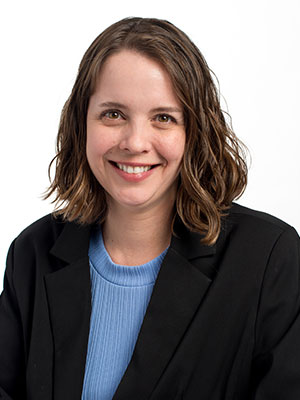
Former COCC Chemistry and Physics student
Lonza Group
Job searches were proving fruitless. Her friends were moving on. Having postponed college after high school, Cathy Phillips Tyler was quite hesitant about going back to school. But at 22, she was in need of a change. Curiously, her aptitude tests had flagged engineering — something that felt beyond reach. "After four years of forgetting the math and science skills I learned in high school, I was unsure," she recalls. "But I eventually decided to just go for it."
"After four years of forgetting the math and science skills I learned in high school, I was unsure,” she recalls. “But I eventually decided to just go for it."
Tyler recalls conversing with other students and family members who had a difficult time with chemistry classes in school, but realized she enjoyed it, enough to take more. "The exact opposite of many people," she says. “This is when I started considering chemical engineering specifically." An instructor at COCC fostered her interest in chemistry and made the classes fun with just the right level of challenge.
Today, the Oregon State University chemical engineering alum works at Lonza on the manufacturing, science and technology team. Among other roles, she helps lead transfer of technology from product development to clinical manufacturing. "I was fortune to be heavily involved with commercializing a new oncology medication, the very first fourth-line therapy approved for patients with a particular type of cancer," she shares. "I tell my child that mommy is going to work to make medicine for very sick people."
Kasey Ziegler
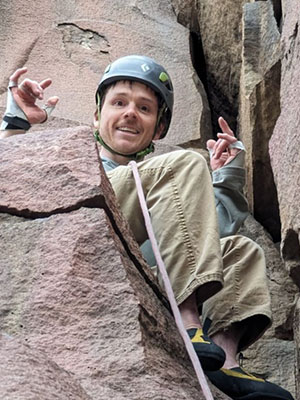
COCC graduate, Associate of Arts Oregon Transfer degree
Bachelor’s degree candidate, chemistry, University of Oregon
Before enrolling at COCC, Kasey Ziegler worked many different jobs but never found a career that he could be completely satisfied with. "Getting an education is a huge deal for me and I don't know if it's possible to express all the gratitude I have for those who have supported me," he says. "I take pride in my education, and I look forward to taking pride in my career"”
Now earning a bachelor's degree in organic chemistry at the University of Oregon, Ziegler is the recipient of the U of O's Oregon Pathways to Industrial Research Careers scholarship, which he received while at COCC. It opens access and training opportunities for talented science students facing financial obstacles, providing support and a guided educational arc through community college and then on to the U of O's Knight Campus Graduate Internship Program.
"The class sizes are typically small, and the amount of communication and feedback that I received from my instructors was extremely helpful. It was a great school for me."
Ziegler will soon pursue his master's degree at the U of O, with plans to embark on a career connected to either polymers or pharmaceuticals. Having diverse, engaging coursework at COCC was a fundamental layer to his higher ed journey, he says. "The class sizes are typically small, and the amount of communication and feedback that I received from my instructors was extremely helpful. It was a great school for me."
Heaven Roberts
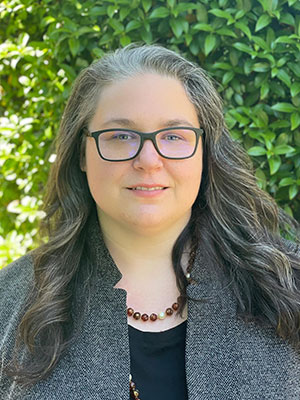
COCC graduate, Associate of Arts Oregon Transfer degree (Pre-Veterinary)
Associate Scientist at St. Jude Children’s Research Hospital
It was finals day at COCC, in the spring term of 2010, and things weren’t going well for Heaven Roberts: She couldn't figure out how to write her name. The Culver resident, a pre-veterinary student with a goal of someday working with horses — a dream she’d harbored since she was a toddler — wasn’t suffering from severe exam-day jitters. She'd recently been in a serious car accident, and the major concussion she'd experienced wasn't allowing her mind to fully connect. She recalls how her professors came to her aid and made sure she postponed the exams until she was ready.
But that was just the start of her journey. What followed were years of speech and occupational therapy. "It was a ton of work," she says. "I felt like an alien…I was a little lost for a while." The mind that emerged after the accident didn't connect with content and material as it once had — it had a new way of processing things. Ultimately, she found a new way forward, a new method of harnessing her attention. “I have a hard time with anything that’s not super analytical." She discovered research-driven work — the minutia, the data explorations — enlivened her mind.
"I got really interested in the new instruments and technologies."
Roberts would earn a bachelor's degree in animal science, and then a Ph.D. in nutritional toxicology, also at OSU, examining fungal toxins in livestock diets. It was actually the equipment used to capture the studies' bioinformatics that spurred a new career direction. “I got really interested in the new instruments and technologies," she recalls of her work as a staff scientist with Thermo Fisher Scientific. Today, she's a scientist at St. Jude Children’s Research Hospital, working in flow cytometry and cell sorting.