Sustainable Humans
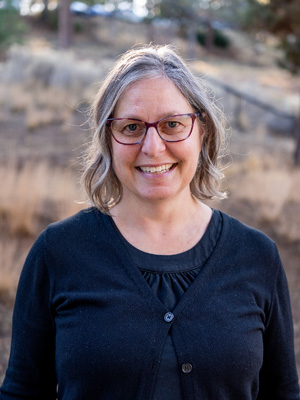
- Megan Michell - Nursing Assistant Program Administrator
The Sustainable Vision
Megan's dedication to sustability is woven into her approach to healthcare administration and education. She has a commitment to integrating environmental stewartship and social responsibility as pillars of the nursing profession and education at COCC.
Curriculum Innovation
Beginning with the Winter 2026 academic term at COCC, NUR 207 will be assigned a sustainability designation. It will have another learning outcome: "Analyze the major environmental, social and economic challenges and potential solutions of our time using a system thinking approach." Beginning in the Fall 2027 term, NUR 112 and NUR 107 will also be assigned a sustainability designation
Community Impact
Due to Megan's leadership in the CHIRP (Community Health Investigative Report Presentation) conference, students are being guided through the "Empowering Nurses" project. She has also helped in teaching students to research public health solutions that improve the health of the community as a whole, thus providing a real-world application for students' learning.
“Megan has inspired us as a department to build toward a more sustainable future by developing sustainability-focused curriculum and therefore inspiring students to embrace and adopt sustainable practices and mindsets. I can’t be prouder of their work, and the example they have set for sustainability in our department and for our students.”
- Amy Shapen, Nursing Program Director and Assistant Professor I
- Melinda Gesuale - Assistant Professor II of Nursing
The Sustainable Vision
With a passion for sustainability, Melinda has been a prime figure in reimagining nursing education. Her lifelong passion for sustainability, community and the environment has fueled her dedication to integrating such elements into the nursing program
Curriculum Innovation
Beginning with the Winter 2026 academic term at COCC, NUR 207 will be assigned a sustainability designation. It will have another learning outcome: "Analyze the major environmental, social and economic challenges and potential solutions of our time using a system thinking approach." Beginning in the Fall 2027 term, NUR 112 and NUR 107 will also be assigned a sustainability designation.
Community Impact
As a co-lead for CHIRP (Community Health Investigative Report Presentation "Empowering Nurses"). Melinda has inspired students to research and evaluate local public health needs. This helps nursing students bridge the gap between classroom material and real-world applications.
Melinda Gesuale - Sustainability Profile (pdf)
- Hal DeShow - Assistant Professor of Geology
How have you been able to integrate sustainable components through your work at COCC?
Sustainability is a mindset; once you adopt it, win-win opportunities appear everywhere. In my Geology courses, we've replaced individual student cars on field trips with shared vans. Not only does this slash fossil fuel combustion, but the 'hum of friendly chatter' in the vans helps students connect. We also prioiritize 'reuseables' in the field from refillable dry-erase markers to laminated handouts and reusable hand warmers for those cold Central Oregon mornings.
Why do you think it's important to incorporate sustainable elements on our campuses?
Because it is the logical thing to do. Inefficient resource consumption is expensive, bad for himan health and accelerates global warming. Every resource we use has a carbon footprint. It's simple: use less stuff, reduce the heat and everyone wins. We are training the next generation to depend on a healthy planet, so we should act like it.
What does a sustainable campus look like to you?
My dream is a campus that makes it easy to do the right thing. That means smart lights and computers that turn themselves off, inviting bike lanes that meander up our intimidating hill and shared inventories where we borrow tools instead of buying them. It's a culture where we frame sustainability as a 'Triple Win' like biking to school to beat traffic, save money on gas and feel alive through exercise all at once!

- Owen Murphy - Assistant Professor of Health and Human Performance
How have you been able to integrate sustainable components through your work at COCC?
As a Public Health instructor, I focus on increasing awareness that a clean environment and a just society are foundational to human health. Beyond the classroom, I serve on the President's Climate Leadership Commitment taskforce, where I helped launch the Ponderosa Project. This workshop empowered twenty faculty members to integrate sustainability into their own curriculum, leading to a growing number of 'Sustainability Designated' courses across the college.
Why do you think it's important to incorporate sustainable elements on our campuses?
Historically, our culture has prioritized short-term profit over long-term social and environmental health. We see evidence in Central Oregon through water shortages, wealth disparities and the impacts of climate change. While these systems are deeply ingrained in policy and law, education is the first step toward change. It is difficult, but entirely possible, to meet our environmental, social and economic needs simultaneously.
What does a sustainable campus look like to you?
In a perfect world, COCC would be a hub of resilience—image solar arrays on every roof and park lot generating renewable power for the community! We would have robust incentives for bikes and electric vehicles and a central purchasing policy that prioritizes local vendors to slash transportation emissions. Most importantly, it means a culture where every decision about campus infrastructure is viewed through a lens of environmental and social impact.

- Angie Cole - Associate Professor of Early Childhood Education
How have you been able to integrate sustainable components through your work at COCC?
The Clothing Connection started from a desire to support students with free professional clothing for interviews and internships. Through partnerships with OSU-Cascades and our Sustainability Coordinator, we opened this resource to all students and employees. We now provide outdoor gear and accessories across the Redmond, Madras and Prineville campuses. Beyond clothing, we host the Green Snowflake event where we collect gently used toys and books for students to share with children over the holidays. We also use grant funds to keep class sets of textbooks on reserve in the Barber Library so students can check them out for the term instead of purchasing individual copies. This is great for the pocketbooks and the planet.
Why do you think it's important to incorporate sustainable elements on our campuses?
I am passionate about this work because our team supports rising educators who will be out in classrooms raising the next generation of citizens. Focusing on the sustainability of books, clothing and consumption helps kids get excited about these ideas when they are young. Hopefully these students will become leaders who expand this priority in all kinds of environments in the future. I love helping COCC students connect to these opportunities right now.
What does a sustainable campus look like to you?
A more sustainable campus is a place where this priority has a natural connection to our conversations, events and courses throughout COCC. I am excited about the creative next steps currently brewing such as a central location where employees can access and share event supplies. This would prevent us from duplicating the purchasing of items that we could all be sharing. I know other staff members have creative ideas in the works and I am eager to support them.